Chelsfield Locksmith Service Team
Local locksmith team
7 Oct 2026 10 min read
If you look at a typical front door in Orpington — whether it is a Victorian terrace off Sevenoaks Road, a 1930s semi near Priory Gardens, or a newer build on the outskirts of the BR6 postcode — you will almost certainly find two locks fitted to it. One sits roughly at eye level and operates with a simple latch; the other sits lower down and requires a full turn of the key to bolt the door shut. These two locks serve very different purposes, and understanding how each one works can help you make smarter decisions about your home security, spot when something has gone wrong, and know when it is time to call a professional.
This guide explains what a mortice lock is, how a nightlatch works alongside it, and why most UK insurers — and most experienced locksmiths — will tell you that you genuinely need both on a timber front door. We will also look at what applies to uPVC and composite doors, since those work quite differently. By the end, you should have a clear picture of the locks protecting your home and what to do if either one is causing you trouble.
## What Is a Mortice Lock, and Why Does It Sit Inside the Door?
A mortice lock is a lock that is fitted inside a pocket — called the mortice — that is cut directly into the body of the door itself. Because the lock mechanism is recessed into the door rather than sitting on the surface, it is far harder to attack or lever off. When you turn the key, a solid steel bolt slides horizontally out of the door edge and into a metal keep (also called a striking plate) set into the door frame. That bolt does not spring back on its own — it stays put until you use the key again, which is why a mortice lock is properly described as a deadlock or mortice deadlock.
The number of levers inside the lock is what most homeowners and insurers care about. A 2 lever mortice lock is the type you might find on an internal door or a garden shed — it offers very modest security and would not satisfy a home insurance policy. A 5 lever mortice lock is a different matter entirely. Five levers make it far more difficult for an intruder to manipulate the mechanism, and a 5 lever mortice lock that meets British Standard BS3621 is the benchmark that most UK insurers specify for timber front and back doors. If your policy documents mention BS3621, check for the kitemark stamped on the lock faceplate — if it is not there, your insurer may not pay out after a break-in. When in doubt, our team can check the standard of your existing lock and advise on a door lock replacement Orpington homeowners can rely on.
## The Nightlatch: Your Door's First Line of Convenience (and Its Limitations)
The lock at the top of most front doors is a nightlatch — often called a Yale lock, after the best-known manufacturer of the type, though the design itself is a rimlock or rim cylinder lock fitted to the surface of the door rather than inside it. A nightlatch works on a spring-loaded latch: when you pull the door shut, the angled latch bolt catches automatically without needing a key. That is what makes it so convenient — you can leave the house quickly without fumbling for keys. To understand what is a rim lock in simple terms, think of it as the opposite of a mortice lock: the body of the lock is screwed onto the inside face of the door, the cylinder passes through the door, and the latch connects to a keep on the frame.
The limitation is significant, though. A standard nightlatch can often be pushed back with a credit card or a strip of plastic because the latch is spring-loaded rather than deadbolted. Many nightlatches include a deadlocking feature — a small button or slide on the inside that holds the latch rigid — but this only works if you remember to use it, and it does nothing when you are out. The rim cylinder itself can also be vulnerable to snapping, a technique where force is applied to break the cylinder and expose the internal cam. This is why, on a timber door, a nightlatch alone is never enough, and why the mortice deadlock below it is so important. If you are locked out Orpington after a cylinder has snapped or a latch has jammed, do not attempt to force the door — call us on 020 3757 6199 and we will be with you in around 30 minutes.
## uPVC and Composite Doors: A Different System Entirely
If your front door is a uPVC or composite door — very common in newer builds and many 1980s and 1990s properties across the Orpington area — you will not have a traditional mortice lock or a simple nightlatch. Instead, these doors use a multipoint locking system: a single handle operates multiple hooks, rollers, and bolts that engage simultaneously at several points along the door frame. The lock is activated by lifting the handle and then turning a euro cylinder with a key. When everything is working correctly, it is an extremely secure arrangement.
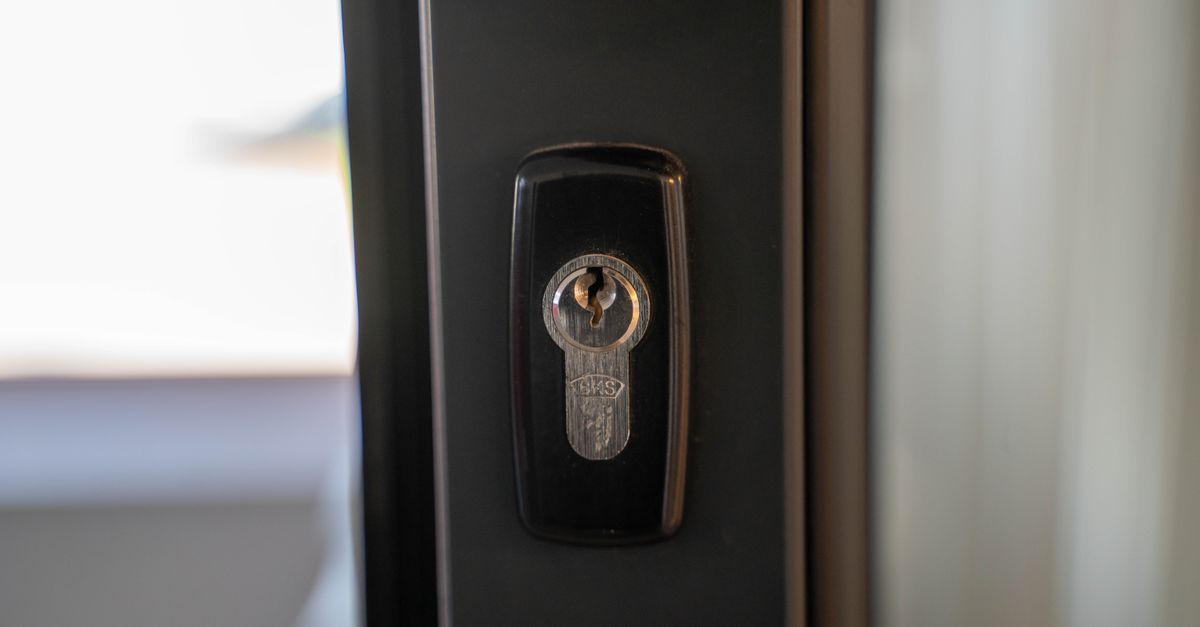
The vulnerability lies in the euro cylinder itself. A standard euro cylinder can be snapped — a burglar applies sharp force to the protruding part of the cylinder, it breaks, and the internal cam that holds the door shut is exposed. The solution is an anti-snap cylinder, ideally one rated to TS007 3-star. If your uPVC door has an older cylinder, or if you have noticed the cylinder sitting proud of the door furniture, upvc door lock repair Orpington is worth arranging sooner rather than later. What is a rim cylinder in this context? It is a different format entirely — a rim cylinder is the round barrel used in a surface-mounted nightlatch, whereas a euro cylinder is the oval-profile barrel used in multipoint and mortice cylinder locks. The two are not interchangeable.
## When You Need Both — and When Something Needs Replacing
For timber front doors, the practical rule is straightforward: use the nightlatch when you are popping out briefly and will be back soon; always lock the mortice deadlock when leaving for any length of time, and whenever you go to bed. Insurance policies in the UK routinely state that both locks must be engaged for a claim to be valid after a break-in. If your door currently has only one of the two, a lock change Orpington is a sensible investment. We can fit a BS3621-compliant 5 lever mortice lock and a deadlocking nightlatch in a single visit, working around your schedule — including evenings, weekends, and bank holidays.
There are several situations where a lock needs attention beyond the usual annual check. Keys that turn stiffly, a latch that does not spring back cleanly, a mortice bolt that is hard to throw, a door that no longer sits square in its frame after a hot summer — all of these are early warnings. Left unaddressed, they tend to get worse, and a lock that fails at 11pm on a Sunday becomes an emergency call-out rather than a planned visit. If you have recently moved into a property, changed tenants, lost a key, or had a break-in attempt, door lock replacement Orpington should be near the top of your to-do list. As a 24 hour locksmith Orpington residents can reach at any time, we see the consequences of deferred maintenance regularly — it is always easier and less stressful to deal with these things before they become a crisis.
## Choosing the Right Lock for Your Front Door
If you are replacing or upgrading locks, the choice depends on your door type. For a timber door, a 5 lever mortice lock to BS3621 paired with a deadlocking nightlatch with a quality rim cylinder is the standard recommendation for Orpington homes — and it is what most insurance policies expect. For a uPVC or composite door, the priority is the euro cylinder: look for anti-snap, anti-pick, anti-drill, and anti-bump ratings, and aim for TS007 3-star. The door furniture — the external door knob with lock and key, or lever handle — should also be robust, since a flimsy handle on a multipoint door can compromise the whole system. An exterior door knob with lock and key on a timber door is often paired with a mortice lock in the same backplate, which is a neat and secure arrangement, but only if the mortice component meets the required standard.
The right lock also depends on who lives in the property. Letting agents and housing associations in the Orpington area often specify particular standards for rental properties; if you are a landlord, it is worth confirming that your front door meets your insurer's requirements before a tenancy begins. As an emergency locksmith Orpington homeowners, tenants, and landlords all turn to, we work with all of these scenarios regularly. We confirm an exact up-front price before any work begins, so there are no surprises — the final cost depends on factors such as the lock type, the parts required, and the time of day, all of which we discuss with you on the phone before we set off. Call 020 3757 6199 — we answer 24/7 and are usually with you in about 30 minutes.
Frequently asked questions
What is a mortice lock, and do I actually need one if I already have a Yale lock?+
A mortice lock is a deadlock fitted inside the door itself, with a solid bolt that only moves when you turn a key. A Yale-type nightlatch — the lock most people call a Yale lock — uses a spring latch that pulls shut automatically but can be vulnerable to being pushed back or to cylinder snapping. For a timber front door, you need both: the nightlatch for day-to-day convenience and the mortice deadlock for security when you leave or go to bed. Most UK home insurance policies require a 5 lever mortice lock to BS3621 on timber front doors for a claim to be valid.
My uPVC front door does not seem to have a mortice lock — is that normal?+
Yes, that is completely normal. uPVC and composite doors use a multipoint locking system operated by a euro cylinder and a door handle, rather than a separate nightlatch and mortice lock. Multiple hooks and bolts engage around the door frame when you lift the handle and turn the key. The main security concern with these doors is the euro cylinder: standard cylinders can be snapped. If your cylinder is not anti-snap and TS007 3-star rated, upvc door lock repair is worth arranging — our team can assess and replace the cylinder in a single visit.
What is the difference between a 2 lever mortice lock and a 5 lever mortice lock?+
The number of levers refers to the number of metal plates inside the lock mechanism that must be lifted to exactly the right position for the bolt to move. A 2 lever mortice lock is easier to pick or force and is only suitable for internal doors or low-security applications like a shed. A 5 lever mortice lock is far more resistant to manipulation — and when it carries the BS3621 kitemark, it meets the standard that most UK home insurers require for external doors. If your front door has a 2 lever mortice lock, replacing it with a compliant 5 lever version is a worthwhile security upgrade.
I am locked out of my home in the Orpington area late at night — what should I do?+
First, check whether you have a spare key with a trusted neighbour or family member, or whether there is another unlocked entrance to the property. Do not attempt to force the door or tamper with the lock yourself, as this can cause additional damage and make the locksmith's job harder. If you cannot get in safely, call 020 3757 6199 — as a 24 hour locksmith Orpington residents rely on, we are available around the clock, including evenings, weekends, and bank holidays. We will confirm an exact price before coming out, and we are usually with you in around 30 minutes.